


Picture a vibrant classroom in Lagos or Nairobi: the teacher isn't buried beneath piles of paperwork but is instead guiding every student's individual learning path—supported by smart, intuitive technology that adapts to unique needs, languages, and strengths. Across Africa, the prospect of AI for school teachers is shifting from distant vision to practical reality, heralding a new era for education.
Reimagining Classrooms: The Potential of AI for School Teachers in Africa
Imagine a classroom where every student receives personalized attention and teachers can focus more on mentorship than marking paperwork. This is no longer a distant dream, but a near-future powered by AI for school teachers in Africa.

- Opportunities presented by AI for school teachers in Africa
- Real-life scenarios of AI transforming teaching approaches
- Emerging roles of educators in an AI-driven ecosystem
The promise of AI for school teachers in Africa is rooted in real challenges. With class size in primary schools often double the global average, overwhelmed teachers are unable to provide the personalised attention every child deserves. Many regions lack basic educational necessities like textbooks and teachers, widening the gap between students in well-resourced versus underserved schools. AI is fast becoming an essential education tool, helping to overcome these barriers by offering personalised and adaptive learning systems—all while reducing administrative workloads so educators can concentrate on teaching.
In real-world scenarios, adaptive learning platforms powered by AI are already offering personalised tutoring and multilingual support. By analysing student progress, these platforms provide personalised attention, making lessons accessible and engaging, no matter a student's background. Educators aren’t being replaced—instead, their roles are reimagined: as facilitators of knowledge, creativity, and critical thinking. As new digital tools emerge, teachers can scale lessons, connect with more students, and deepen their impact—building a more resilient, forward-thinking Africa.
As African educators continue to integrate AI into their teaching, it's important to stay informed about the evolving landscape and the resources available. For ongoing updates and community-driven insights on educational innovation, you can visit She Evolves Africa, where discussions around technology and empowerment in African classrooms are regularly explored.
Current Applications and Future Possibilities of AI for School Teachers in Africa
| Application | Potential Benefit |
|---|---|
| AI-Based Lesson Planning | Time savings and curriculum customization |
| Assessment Automation | Immediate feedback and reduced administrative load |
| Language Translation Tools | Inclusive learning in multilingual classrooms |
African classrooms stand at a transformative crossroads—AI could be the catalyst that bridges the gap between resource constraints and innovative education delivery.
What You'll Learn
- Key examples of AI advancements for school teachers in Africa
- How educators can prepare for AI-powered changes
- Challenges and risks on the horizon

Practical applications of AI for school teachers in Africa are already surfacing. Tools like adaptive learning systems are supporting both students and teachers by personalizing educational content and offering real-time analytics. For example, in some South African schools, AI software analyses in-class responses and suggests materials specifically tailored to areas where students are struggling. Automated assessment platforms reduce teachers’ marking loads, providing immediate feedback for learners and freeing up valuable teacher time for classroom engagement. Language translation tools break down the challenge of multilingualism in African education, offering scalable and localised learning even in communities where diverse languages are spoken.
Looking ahead, the future of AI adoption in African education holds even more promise. With foundational digital infrastructure expanding, AI will become more intertwined with daily classroom experiences—powering everything from digital textbooks to voice-based tutoring assistants. The key will be ensuring educators are equipped, that software is tailored to Africa’s realities, and that leaders continue to invest. As this report explores, progress will depend on not just having new technology, but a commitment to bridging the gap between innovation and educational inclusion.
People Also Ask: AI for School Teachers in Africa
Which African country is leading in AI?
- Discussion of nations making significant AI investments
- Implications for local education systems

Several African countries are emerging as leaders in the adoption of AI for school teachers and beyond. Nations like South Africa, Nigeria, Kenya, and Egypt have made significant investments in both technology and policy infrastructure. South Africa, for instance, has rolled out programmes to train teachers in AI-powered education tools, while Rwanda’s government is integrating AI within national education planning. These actions don’t just boost tech-savvy graduates—they create the model classrooms for scalable adoption, even in resource-constrained settings. If African governments continue supporting localised learning and teacher training, the entire continent stands to benefit from tailored, innovative solutions that meet the unique challenges of the region’s education sector.
These national efforts send signals to policymakers and school leaders elsewhere—affirming that AI adoption is not only possible but essential for keeping pace with global education standards. Such investments help build the groundwork for local entrepreneurs, founders, and innovators to create Africa-specific digital tools that can serve diverse linguistic and cultural needs. As a result, we’re seeing powerful examples from east to west: from adaptive learning pilots in Nairobi to AI-driven curriculum planning in Lagos, the future of african education is taking shape.
What is the best AI for school teachers?
- Current AI tools used by African educators
- Criteria for choosing AI solutions in classrooms
The “best” AI for school teachers in Africa is one that fits the unique needs of classrooms across the continent. Tools such as adaptive learning platforms, automated grading systems, and language translation apps are already being piloted. The most effective solutions often blend global technology with localised content—ensuring that AI aligns with curriculum standards and addresses the realities of large class size or limited resources. African educators look for AI platforms that are intuitive, require minimal extra training, and can function reliably even in settings with intermittent internet connectivity. It’s also critical that these education tools have strong data privacy protections and clear paths for integration with existing teaching workflows.
Decision-makers must weigh several factors: accessibility, upgradability, language support, and cost-effectiveness. Teachers and leaders are most likely to embrace platforms that provide clear, measured improvements to student engagement and outcomes, while minimizing the learning curve for busy educators. As AI is also enabling more inclusive classrooms, readiness to adapt is key—both in teachers and the tools they use.
Which African country pays teachers the most?
- Financial incentives impacting teacher retention and innovation
- Connection between AI adoption and teaching conditions
Teacher pay varies across Africa, with countries like South Africa, Botswana, and Namibia often cited as offering higher salaries. The link between teaching conditions and AI adoption is especially important: where financial incentives are strong, there’s greater capacity for professional development, piloting new education tools, and building innovative school cultures. Higher pay doesn’t just retain talent—it also gives teachers the flexibility to engage in upskilling, making it easier to integrate AI-driven platforms and lesson aids.
In countries facing challenges with teacher salaries and resource shortages, AI can help bridge gaps. By automating repetitive tasks and providing intelligent feedback, even small-scale solutions can reduce the workload for educators and free up more time for creative instruction. At the same time, equitable pay is critical for sustaining AI’s benefits—it ensures teachers are motivated and trained to realise a future in which technology and talent progress hand-in-hand.
How is AI being used in Africa?
- Broader AI applications in African society
- Examples from the education sector
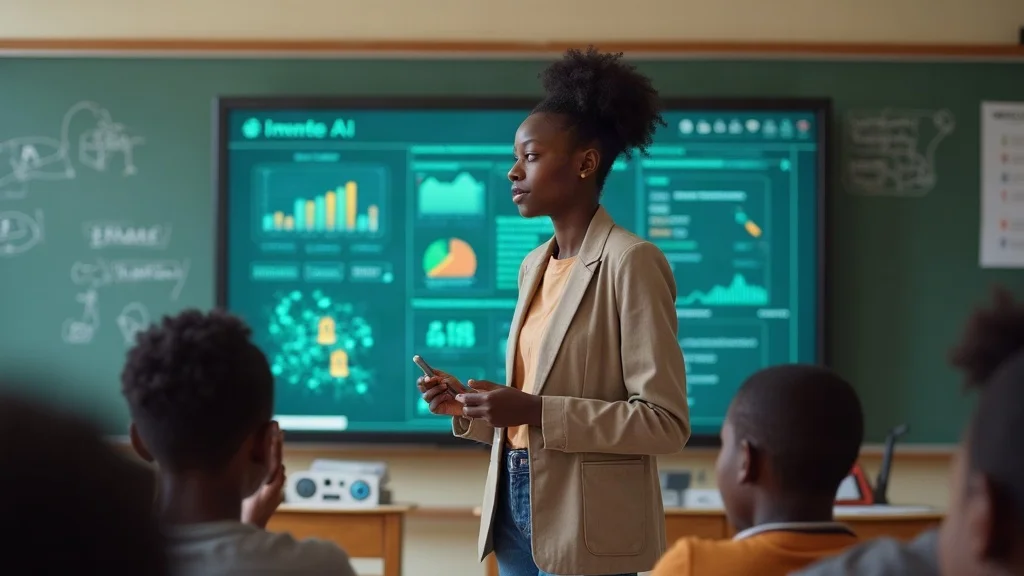
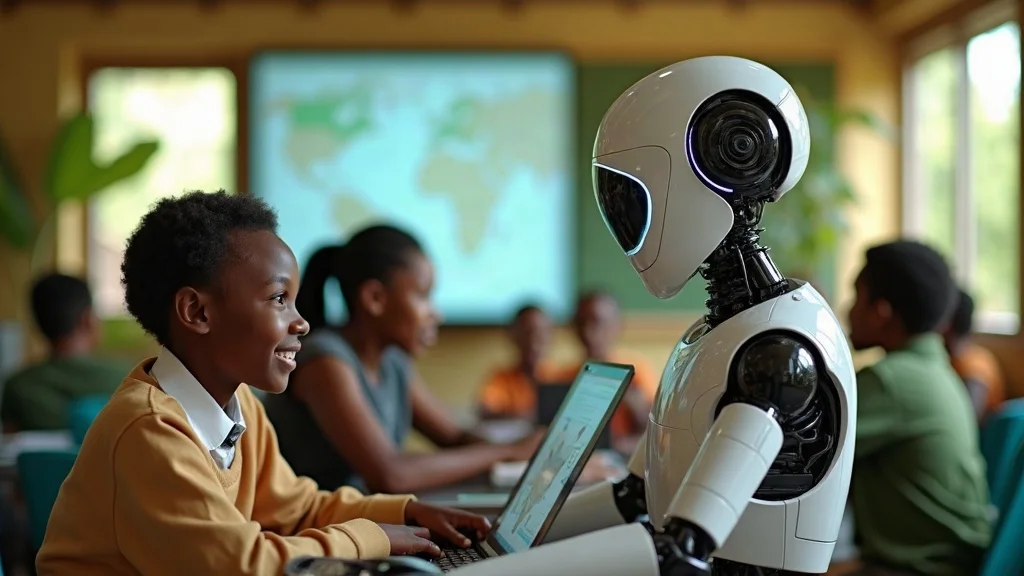
Beyond education, AI adoption in Africa spans agriculture (precision farming), healthcare (diagnostic support), and urban planning (traffic optimisation). In schools, AI is transforming how african education is delivered. Adaptive learning platforms assess individual student strengths and weaknesses, providing recommendations for further study and practice. Automated translation helps bridge the language gap, and chatbot tutors supplement teacher guidance, especially in overcrowded classrooms with limited staff.
The challenge lies not in the lack of vision but in ensuring that new tools are relevant, equitable, and sustainable. The research also references several projects funded by public-private partnerships, showing that collaboration among founders, governments, and donors is key to scaling positive results. The journey to AI for school teachers in Africa becoming mainstream is ongoing—but with intentional investment and community buy-in, the benefits can extend across sectors and generations.
Ways Forward: Empowering School Teachers in Africa with AI
- Steps African teachers can take to integrate AI into their classrooms
- Voices from business leaders and founders on the importance of AI literacy for educators
- Ethical considerations and community engagement

"AI isn't just about automation—it’s about empowerment. For educators across Africa, it unlocks new dimensions of creativity and inclusion." – African EdTech Founder
For teachers eager to embrace this transformation, starting with basic digital skills is essential. Participating in workshops, joining digital learning communities, and experimenting with entry-level AI tools can demystify new technology. Educational leaders and founders are increasingly vocal about the importance of AI literacy: it’s not only about learning to use the newest platforms, but about understanding how to adapt traditional teaching to keep it relevant. Ethics must be a cornerstone as well—data privacy, consent, and community engagement are critical in building trust and ensuring safe, localised learning experiences.
Teachers should seek support from visionary business leaders, government initiatives, and cross-sector collaborations. These partnerships can provide both the infrastructure and cultural momentum necessary to overcome the limited resources and infrastructural barriers that persist. Finally, schools will thrive by cultivating a mindset of ongoing learning and experimentation, ensuring the benefits of AI for school teachers in Africa are accessible to all, not just the most privileged.
Key Takeaways
- AI for school teachers in Africa can revolutionise education through personalised learning and efficiency.
- Critical collaboration is needed among business leaders, policymakers, and educators.
- Being proactive and adaptive is essential as the AI landscape rapidly evolves.
FAQs
-
What skills do teachers need to use AI effectively?
Teachers need digital literacy, openness to learning, critical thinking, and a basic understanding of data privacy principles. As AI adoption grows, the ability to adapt lesson plans, experiment with new digital tools, and foster inclusive, localised learning experiences will become invaluable. -
Are there free AI tools accessible to African school teachers?
Yes, several AI-powered education tools offer free versions or trials, focusing on adaptive learning, translation, and lesson planning. Open-source software and partnerships with EdTech organisations can also lower barriers for teachers with limited resources. -
What are the risks to data privacy with AI in classrooms?
Risks include unauthorised data access, mishandling of student information, and lack of informed consent. Effective AI for school teachers in Africa platforms prioritize ethical design, transparency, and community oversight to address these concerns. -
How can school communities support teachers' upskilling in AI?
Communities can organize ongoing training, provide access to webinars, encourage peer-to-peer sharing, and advocate for policy that supports teachers’ professional development. Collaboration ensures teachers are trained and empowered for the AI age.
Join the Movement
- We invite you to join the conversation about the Founders Readiness pathway, in the Age Of AI : https://The.PersonalBrand.Africa/founder-sole-identity-visitor-space
Conclusion: AI for school teachers in Africa is already reshaping education—join the wave, empower classrooms, and help realise a future where every learner thrives.
Sources
- How AI can transform Africa's learning crisis into a ...
- Advancing the use of AI in education in Africa
- Artificial Intelligence in Sub-Saharan Africa - Education Report
- (PDF) REVIEW OF AI IN EDUCATION: TRANSFORMING ...
- Exploring AI's Potential to Transform Education in Africa
- The cultural cost of AI in Africa's education systems


Write A Comment